Wednesday, November 28, 2012

THE TEMPEST WITH ALLIE: Summary/Analysis of Act 1 Scene 1


        A terrible storm tosses a ship at sea.  The ship carries Alonso, the King of Naples, and assorted courtiers on the journey home from Alonso’s daughter’s wedding in Tunisia.  The Boatswain of the ship shouts commands at the passengers to keep below deck to ensure their safety and because they are getting in the way of the sailors’ work.  When Gonzalo reminds the Boatswain to remember who is on the ship, the Boatswain insists that nature does not care that the ship holds a king and that, under such circumstances, his own authority must be respected: “What cares these roarers for the name of king?  To cabin! silence! Trouble us not.” 
       The play begins with a scene of upheaval.  The courtiers are bound for a place where nothing is as it seems, and big changes await them.  In this scene, they get their first taste of powerlessness.  The wildness of nature (in reality a spell worked by Prospero) has turned the tables on them, so that someone who would normally be their subject, the Boatswain, now gives them orders.

       Gonzalo, a counselor to the king, jokes that he’s no longer afraid of drowning, because it seems to him that the Boatswain is destined to die by hanging rather than drowning.
       Gonzalo’s response to his powerlessness is to make a joke... 
      Antonio and Sebastian are furious at the Boatswain for his audacity in ordering them around. They hurl insults at him, calling the Boatswain, among other things a “dog,” “cur,” “whoreson,” and an “insolent noisemaker” (1.1.35-38). 
       In contrast, the more power-hungry Antonio and Sebastian are infuriated by the Boatswain’s lack of regard for their authority. 
      The ship cracks. Sailors pray for their lives. Antonio and Sebastian run to be with King Alonso as the ship goes down, while Gonzalo prays for land, any land, to save him from drowning.
      Antonio and Sebastian want seek out the king (and his power) in times of trouble. The storm has humbled the menso that—survival is more important now than anything else.


Monday, November 5, 2012

FRANKENSTEIN TIME WITH ALLIE: "Walton, in continuation" Summary and Analysis


 The novel returns to the frame of Walton’s letters to his sister, Margaret Saville.  In a letter on August 26, Walton says that he believes Victor’s story and recalls how Victor described himself as the victim of “lofty ambition,” which brought him to despair.  Walton laments that he did not know Victor when they could have been friends.  As Walton writes, “I have sought one who would sympathize with and love me.”  Yet while Victor responded kindly to his offers of friendship, he remained fixated on his only remaining destiny: to destroy the monster.   Walton and Victor are after the same thing: love, acceptance, and glory.  And in both cases, their ambition worked against their hope for love and acceptance.  Both men end up trapped and isolated, Walton by nature and Victor by the need for vengeance. 

 In a letter on September 2, Walton tells Margaret that his ship and crew are in grave danger: the ship is now surrounded entirely by ice.  He blames himself for their fate and says they may all die as a result of his “mad schemes.”  He fears a mutiny.   Just as Victor lost his innocence and realized the dangers of his ambition, so too does Walton.  Walton also fears vengeance from the “monster” of his crew.  

 In a letter on September 5, Walton says that his crew have demanded that he turn the ship around and head for home as soon as the ice frees them.  Victor speaks up in his defense, telling the rebellious crew members they should “be men” for they had set out to be the “benefactors of [their] species.”  The speech changes the crew’s mind, but Walton fears only temporarily. He says he’d rather die than return in shame with his “purpose unfulfilled.”   Walton maintains the innocent ideal notion that he can somehow enlighten all of humankind by seeing the North Pole. The same mix of arrogance, benevolence, and lust for fame fuels both his and Victor’s ambitions.  Victor’s speech implies that he has not, in fact, changed much at all.  

 In a letter on September 7, Walton says he has agreed to the crew’s demand to turn back.  He considers what has happened an injustice.   Like Victor, Walton blames his failure not on his ambition or his fallibility, but on others. 

 In his final letter on September 12th, Walton says that he has turned back, his hopes of “glory” and “utility” crushed. In addition, Victor, has died.  Victor had objected to Walton’s decision to turn back his ship and said that his own “purpose” remained firm.  Victor then tried to rise and return to the ice, but could not.  He reaffirmed his certainty that he acted well in trying to defend his fellow man against the monster, his creation.  He then died quietly, eager to rejoin the relatives he had lost in life.  Like Victor, Walton’s ambition destroys everything around him until he’s left alone.  Victor, quick to judge everything but himself, expects Walton to stick to his convictions, but his own conviction is a need for revenge.  If he had truly acted in “good faith,” he would have confronted his prejudice, or, failing that, told his secret earlier.   

Walton interrupts his letter upon hearing a disturbance in the cabin where Victor’s body lies.  He returns to tell Margaret that he has just seen the monster crying over Victor’s corpse. To Walton’s shock, the monster says he suffered remorse and pity for Victor all along. Walton calls the monster a “wretch.”  The monster is unsurprised, having been rejected by people from the start. It says that it abhorred itself even as it was doing evil, and describes itself as a “fallen angel,” yet it also wonders why only it, and not Felix, or the man who shot it, or Frankenstein, is considered a “criminal.” The monster then promises to end its own life, springs from the cabin back onto the ice, and disappears.  The last person the monster encounters before killing itself treats it unfairly, with the same prejudice and bitterness the monster faced throughout its life. The monster’s use of religious language to describe its plight suggests the connection between Frankenstein and Paradise Lost, and between the monster, Adam, and Satan.  With a final condemnation of the prejudice it has always faced and the weakness of men, the monster reveals its final loss of innocence: it’s own self-hatred, and wish to die.


FRANKENSTEIN TIME WITH ALLIE: Chapter 23 and 24 Summary and Analysis

The monster killing Elizabeth


CHAPTER 23
A storm rolls in after they arrive at the cottage.  Victor, armed with a pistol and terrified that the monster will attack at any moment, sends Elizabeth to bed for her own safety.  But as he searches the house, he hears a scream.  Elizabeth has been murdered.  While huddled over her lifeless body, Victor sees the monster at the window.  He fires at it, but misses.  Victor assumed the monster would attack him, not realizing that the monster wanted revenge by subjecting him to the same horror to which he subjected it: isolation.  This mistake resulted in Elizabeth’s death.  Victor rushes back to Geneva.  The news of Elizabeth’s death overwhelms his father, who dies a few days later.  Now the monster’s revenge is complete: Victor is alone (besides Ernest).  Victor goes mad for several months and is kept in a cell.  When he regains his senses he tells his entire story to a local magistrate, hoping to enact justice on the monster.  The magistrate listens but doesn’t entirely believe Victor and, anyway, considers tracking down the monster impossible.  Victor resolves to seek his revenge on his own.  Finally, Victor tells his secret.  But it’s too late.  Now he faces the same predicament as the monster: rejected by humankind, he must seek revenge on his own.  He curses the magistrate and all of humanity.  “Man,” he cries, “how ignorant art thou in thy pride of wisdom!”  Victor’s curse is similar to the monster’s curse of him.  They are now essentially the same.


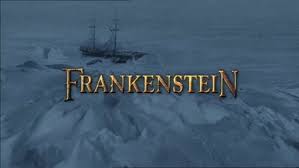
Victor trekking the monster in the icy North


 CHAPTER 24
Victor decides to leave Geneva forever.  While visiting the graves of his family he swears revenge, and hears the monster’s voice calling him a “miserable wretch.”  The monster’s revenge is successful; now Victor suffers isolation as it does.  For months, Victor tracks the monster northward into the frigid Arctic regions, led by clues and taunting notes the monster leaves behind. Victor chases the monster onto the frozen ocean with sleds and dogs, and comes within a mile of the monster’s own sled, but then the ice breaks up beneath Victor’s sled.  The barren arctic is a perfect symbol of isolation and the power of nature. A man in this tundra is utterly alone and entirely at the mercy of nature.  This is the point at which Walton’s ship rescued him.  The narrative comes to the present.  Victor, knowing he’s dying, begs Walton to take vengeance on the monster if he should happen to see it.  Victor has finally told his story and secret to a sympathetic audience.  But is there any difference between Victor and the monster but appearance?  

Saturday, October 27, 2012

FRANKENSTEIN TIME WITH ALLIE: Chapter 21 and 22 Summary and Analysis


CHAPTER 21:

          At Mr. Kirwin’s office, Victor learns that a man in his mid-twenties was found dead on the shore with black marks on his neck.  And various witnesses testify that a boat much like Victor’s was seen at sea.  Victor is taken to see the body.  It is Clerval.  Victor falls into convulsions, and remains bedridden and delusional for two months.  The monster’s revenge and Victor’s ambition cost another innocent life.  The monster intentionally targets Victor’s closest family and friends, making Victor’s isolation as enforced as its own.  When Victor regains awareness he is still in prison.  Mr. Kirwin treats him kindly, advising him that he’ll likely be freed. He also tells Victor that his father has come to see him.  Yet unlike the monster, Victor still does have connections to other men and a family.  Two weeks later Victor is released because the court has nothing but circumstantial evidence against him. Despairing and determined to protect his family from the monster, Victor returns with his father to Geneva.  Victor’s release stands in contrast to Justine’s conviction. But Victor has his father helping him, while Victor stayed silent and did not help Justine.  

CHAPTER 22:

           En route to Geneva, they stop in Paris so Victor can regain his strength.  His father tries to help by getting him to engage with society, but Victor feels he has no right to.  Victor even tells his father he murdered Justine, William, and Clerval.  His father considers him deranged, and Victor says no more.  As Victor’s father seeks to draw him into society, Victor increasingly resembles the monster in his sense that he’s an outcast.  As part of his isolation, Victor continues to keep his deadly secrets.  While in Paris, Victor receives a letter from Elizabeth. She expresses her desire to marry Victor, but worries he may have taken another lover during his long absence.  Victor remembers the monster’s vow to be with him on his wedding night, and decides that whether he kills it or it kills him, at least he will be free.  He writes back that he wants to marry immediately, but adds that he has a terrible secret he will tell her the day after they are married.  Victor’s cutting himself off from society makes Elizabeth doubt his love for him.  But won’t waiting until a day after his wedding to tell his secret be too late?  A selfish half-confession by Victor, who thinks more about himself than Elizabeth.  A week later Victor and his father arrive in Geneva.  The wedding takes place ten days later.  Yet as Victor and Elizabeth sail to a cottage by Lake Como in Italy for their honeymoon, Victor’s fear of facing the monster dissolves his happiness.  Elizabeth tries to cheer him by pointing out the beauty in nature.  It doesn’t work.  By now a painfully familiar scene: Victor depends on the temporary relief of Nature and the support of his companion, now Elizabeth instead of Clerval or Alphonse, in order to ease his anxiety.  

 MAJOR THEME OF CHAPTER 21: 

Lost Innocence:
Frankenstein presents many examples of the corruption of youthful innocence. The most obvious case of lost innocence involves Victor.  A young man on the cusp of adulthood, Victor leaves for university with high hopes and lofty ambitions.  He aims to explore “unknown powers” and enlighten all of humanity to the deepest “mysteries of creation,” but his success and his pride brings an end to his innocence.  He creates a monster that reflects back to him the many flaws inherent in his own species (an unquenchable thirst for love, a tendency toward violence, and a bloodthirsty need for justice and revenge) and in himself (prejudice based on appearance).  And, in turn, Victor’s cruel “un-innocent” behavior also destroys the monster’s innocence.


Monday, October 22, 2012

FRANKENSTEIN TIME WITH ALLIE: Chapter 19 and 20 Analysis


SUMMARY/ANALYSIS:


Victor and Clerval arrive in London in October. Victor continues to despair, avoiding people unless they have information that can help him create a second monster.  Clerval, in contrast, is how Victor used to be: excited by learning and wanting to meet and talk to everyone.  Clerval’s innocence contrasts with Victor and shows the joy and delight Victor’s ambition cost him. 
Victor and Clerval travel to Scotland.  There, Victor leaves Clerval with a friend and travels on alone.  He goes to a remote island in the Orkney’s, sets up a lab, and works in solitude on his secret project.  Once again Victor isolates himself from society. Whenever he does this, he makes bad, reckless decisions that cause disaster.  One night in his lab, Victor worries that the new creature he’s creating might refuse to live away from humans, or that the two monsters might produce a “race of devils.” Just then he looks up and sees the monster “grinning” at the window. Overwhelmed by loathing, Victor destroys his work. Outside, the monster howls in agony, and disappears.  The monster might have been grinning in joy at the sight of its companion. But Victor’s superficial prejudice is too powerful. He once again betrays the monster’s trust and sentences it to permanent isolation.  Hours later, the monster returns to Victor’s lab. It now refers to Victor only as “Man” and vows revenge. It promises: “I shall be with you on your wedding night.” Victor thinks the monster means to kill him on that night, and fears for Elizabeth left alone as a widow.  The monster now sees Victor as its enemy, as “Man,” and vows revenge. Victor’s fear for his own life shows he doesn’t understand the monster’s true misery: isolation.  A letter soon arrives from Clerval suggesting they resume their travels. Victor gathers up his laboratory materials and rows out into the ocean to dump them. Victor is so happy he takes a nap in his boat. But he wakes into rough weather and can’t get back to shore. Just as he begins to panic, the winds ease.  Victor panics in the boat because he fears being cut off from land, from human society. It is the same fear as the monster’s, but Victor’s prejudice doesn’t let him recognize it.  When Victor lands a group of angry townspeople gathers around his boat. He’s a suspect in a murder that occurred the previous night, and sent to meet with Mr. Kirwin, a local magistrate.  A cliffhanger ending; it seems likely the monster has already taken some revenge, but how?

MAJOR THEM ALERT!
REVENGE!!!!!!!
In taking revenge, two things happen to the monster. First, it ensures that it will never be accepted in human society. Second, because by taking revenge the monster eliminates any hope of ever joining human society, which is what it really wants, revenge becomes the only thing it has. As the monster puts it, revenge became “dearer than light or food.”

Tuesday, October 16, 2012

FRANKENSTEIN TIME WITH ALLIE: Chapter 16 Analysis

           After reading chapter 16, I discovered many important themes and ideas that are important to the further development of the monster's social, emotional, and academic being.  Here is a brief summary/analysis with some basic themes that occur in this chapter as well as many others: 

Summary/Analysis 
In this chapter, The family’s rejection plunges the monster into a fit of rage. But the beauty of the next day calms him. He decides to approach De Lacey again to try to make amends.  The monster’s faith in old De Lacey shows its last gasp of innocence, saving it from the rage born of rejection.  But by the time the monster reaches the cottage, the De Lacey’s have moved out. He sees Felix terminating his lease with the landlord, and never sees any of them again. His last link with society destroyed, the monster gives in to rage and a desire for revenge. He burns down the cottage and heads for Geneva and Victor.  Its innocence and hopes of inclusion in society dashed, the monster is left with only pain, and naturally wants to hurt those who hurt it. That includes human society (symbolized in the house he burns) and its creator, Victor.  At one point along the way the monster saves a beautiful little girl from drowning in a stream, only to be shot by her guardian. His suffering only feeds his desire for revenge.  Another example of humanity’s tendency toward prejudice, which only increases the monster’s desire for revenge.  After a few weeks, the monster makes it to Geneva. There he encounters a young boy. Thinking the boy would be too young to be horrified by his appearance, the monster approaches him. But the boy is terrified, and shouts that his father, Frankenstein, will kill the monster. The monster silences the boy by strangling him. The boy dies.  Again the monster shows an innocent belief in man, this time that the young will be less prejudiced than the old. His hopes again dashed, coupled with the boy’s connection to Victor, spur the monster to uncontrollable revenge.

MAJOR THEME ALERT!
The true evil in Frankenstein is not Victor or the monster, but isolation. When Victor becomes lost in his studies he removes himself from human society, and therefore loses sight of his responsibilities and the consequences of his actions. The monster turns vengeful not because it’s evil, but because its isolation fills it with overwhelming hate and anger. And what is the monster’s vengeance? To make Victor as isolated as it. Add it all up, and it becomes clear that Frankenstein sees isolation from family and society as the worst imaginable fate, and the cause of hatred, violence, and revenge.

Wednesday, October 10, 2012

POEM TIME WITH ALLIE: Spring Pools by Robert Frost

                Along with my favorite poem, Stopping by Woods on a Snowy Evening, I also enjoy many of Robert Frost's other poems, such as Spring Pools.  I grew up reading and hearing Robert Frost poems from parents, who both have many poetry books filled with Frost's poems.  Here is the poem, Spring Pools, another one of my favorites:


Spring Pools

 These pools that, though in forests, still reflect
The total sky almost without defect,
And like the flowers beside them, chill and shiver,
Will like the flowers beside them soon be gone,
And yet not out by any brook or river,
But up by roots to bring dark foliage on.
The trees that have it in their pent-up buds
To darken nature and be summer woods---
Let them think twice before they use their powers,

To blot out and drink up and sweep away,
These flowery waters and these watery flowers,
From snow that melted only yesterday. 


My Analysis:

Humans are romantic, and tend to identify themselves with nature.  In poetry, nature and seasons are good ways to express one’s emotions.
"Spring Pools" by Robert Frost talks about the poet’s feelings for the spring season, which tends to pass way too quickly (line 12). Frost relates springtime with happiness and opportunity for new beginnings.  For example, the pools of water formed by melted snow from the passing winter and all the flowers around it indicate it is springtime (lines 11& 12).  The snow that melted recently is considered as the better aspect of life, leaving behind the end of a cold, gloomy winter and entering the beginning of a bright, beautiful spring. We can relate this to life itself, because humans always want to leave the bad behind and start fresh and new.  When Frost writes to let the "summer woods think twice before they use their powers" (line 8 & 9), he is advising the woods to think twice about absorbing the water, because this is a sign that the summer will end.  Frost knows nature cannot stop; he just wants it to slow its course.  This is obviously personification, which appears more than once throughout the poem, since woods cannot think nor stop it’s course.  This is clearly a situation in which humanity clings to emotions and opportunity.  He wishes to be happy as long as he can.